
Search Our Database
How to Enable Error Logs for PHP in DirectAdmin (Enhanced Skin)
Introduction
PHP error logging records runtime errors, warnings, and notices to server log files, which is essential for troubleshooting and monitoring application health without exposing errors to website visitors. Enabling error logging allows developers and administrators to track issues, diagnose problems, and maintain security by keeping error details private while ensuring comprehensive error documentation. DirectAdmin’s PHP Settings interface provides a straightforward method for activating error logging through custom PHP overrides. This guide explains how to enable error logging using the PHP Settings section in DirectAdmin, ensuring all PHP errors are captured in server logs for review and analysis.
Prerequisites
- Access to DirectAdmin control panel with the necessary permissions.
Step-by-step Guide
Step 1: Access DirectAdmin
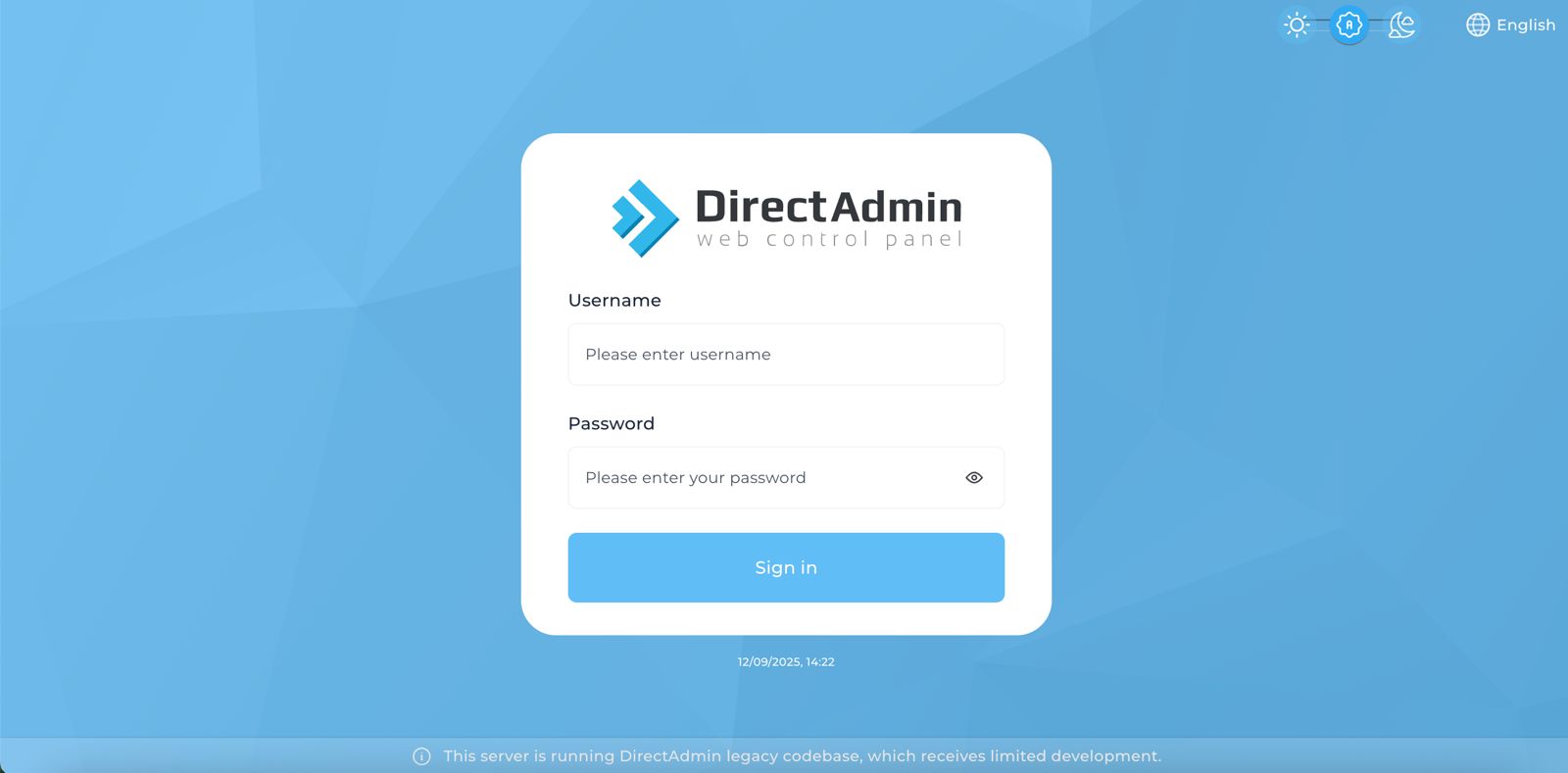
Log in to your DirectAdmin control panel.
Step 2: Access PHP Settings
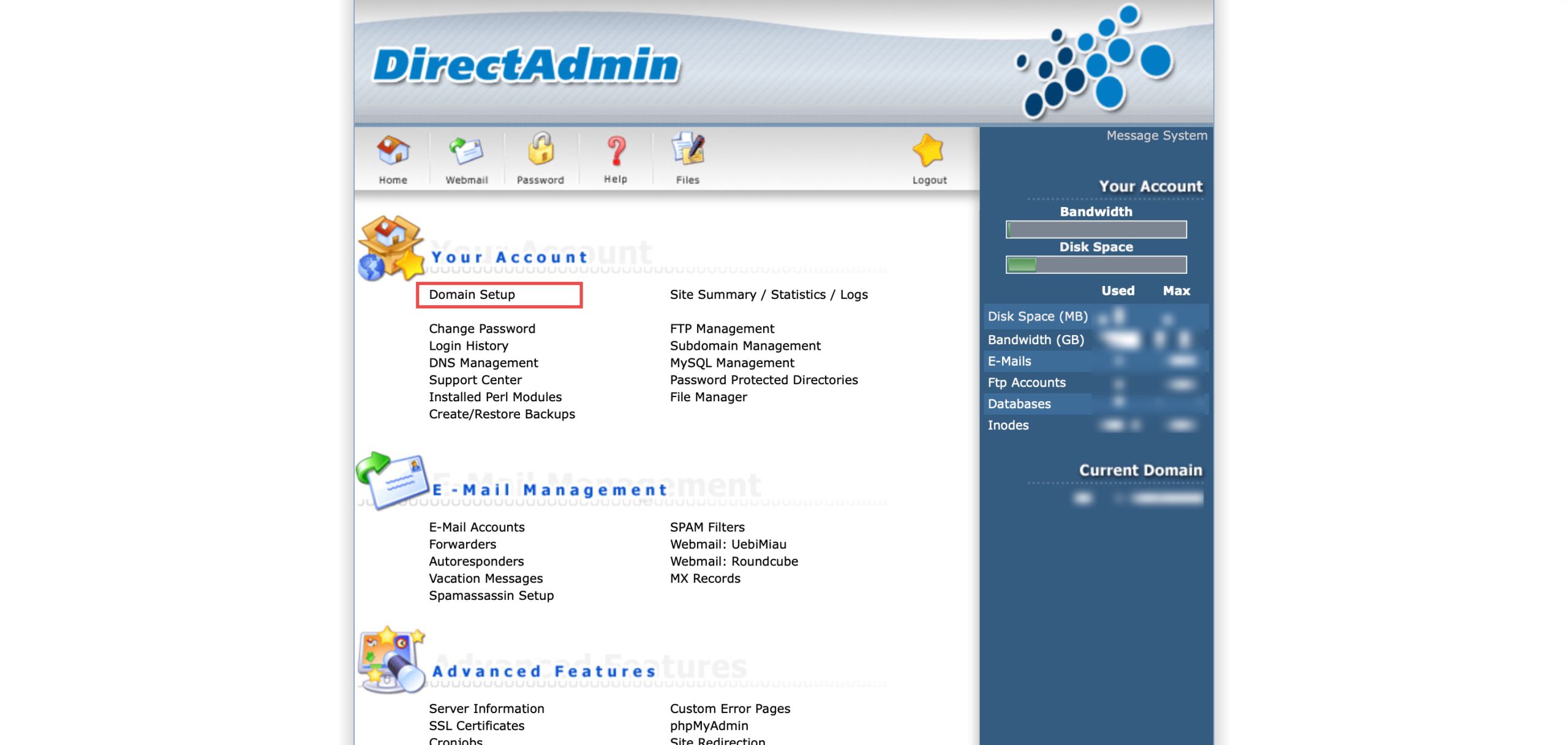
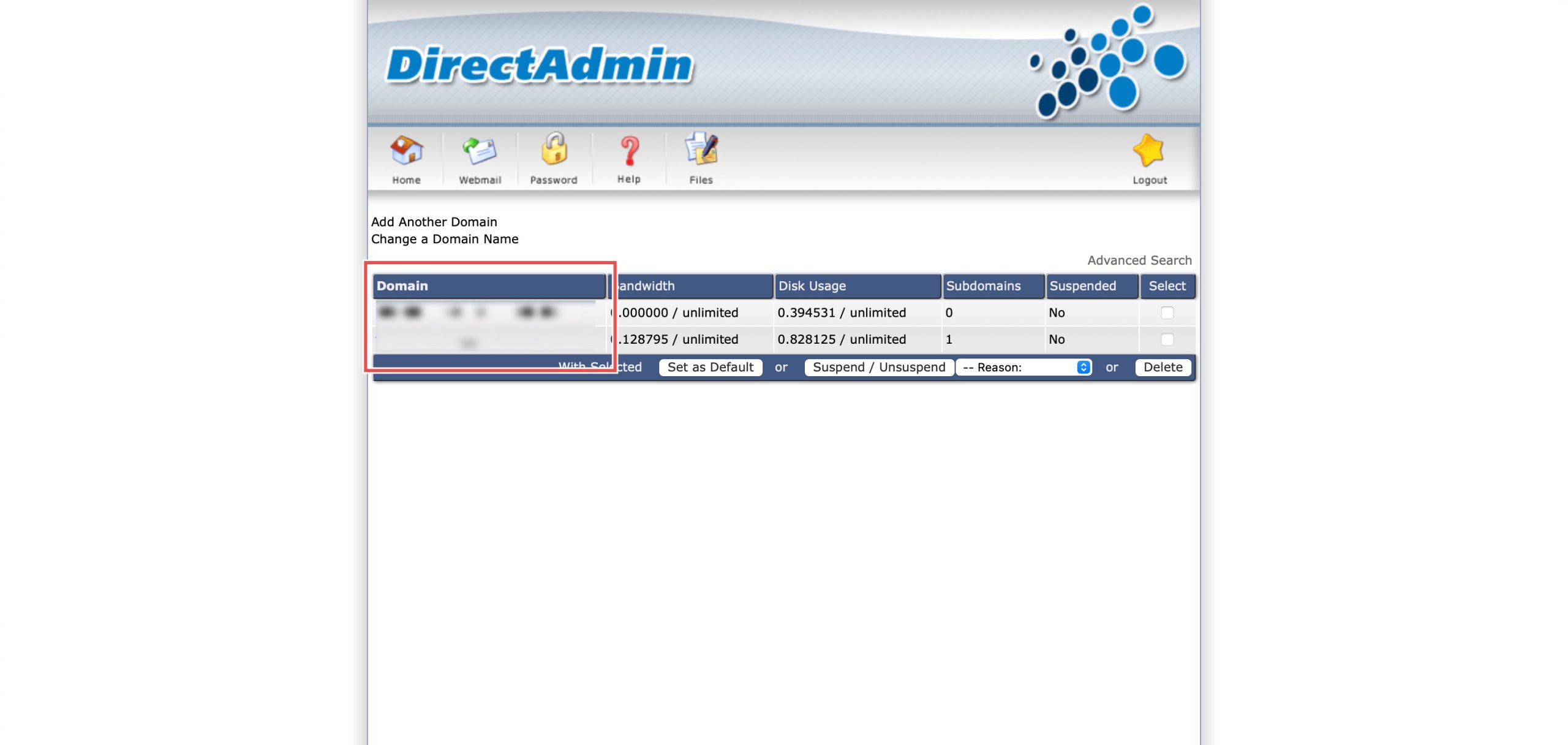
Go to the Your Account section and click on Domain Setup. Then, select the domain/subdomain you wish to modify PHP settings for by clicking on the domain/subdomain name.
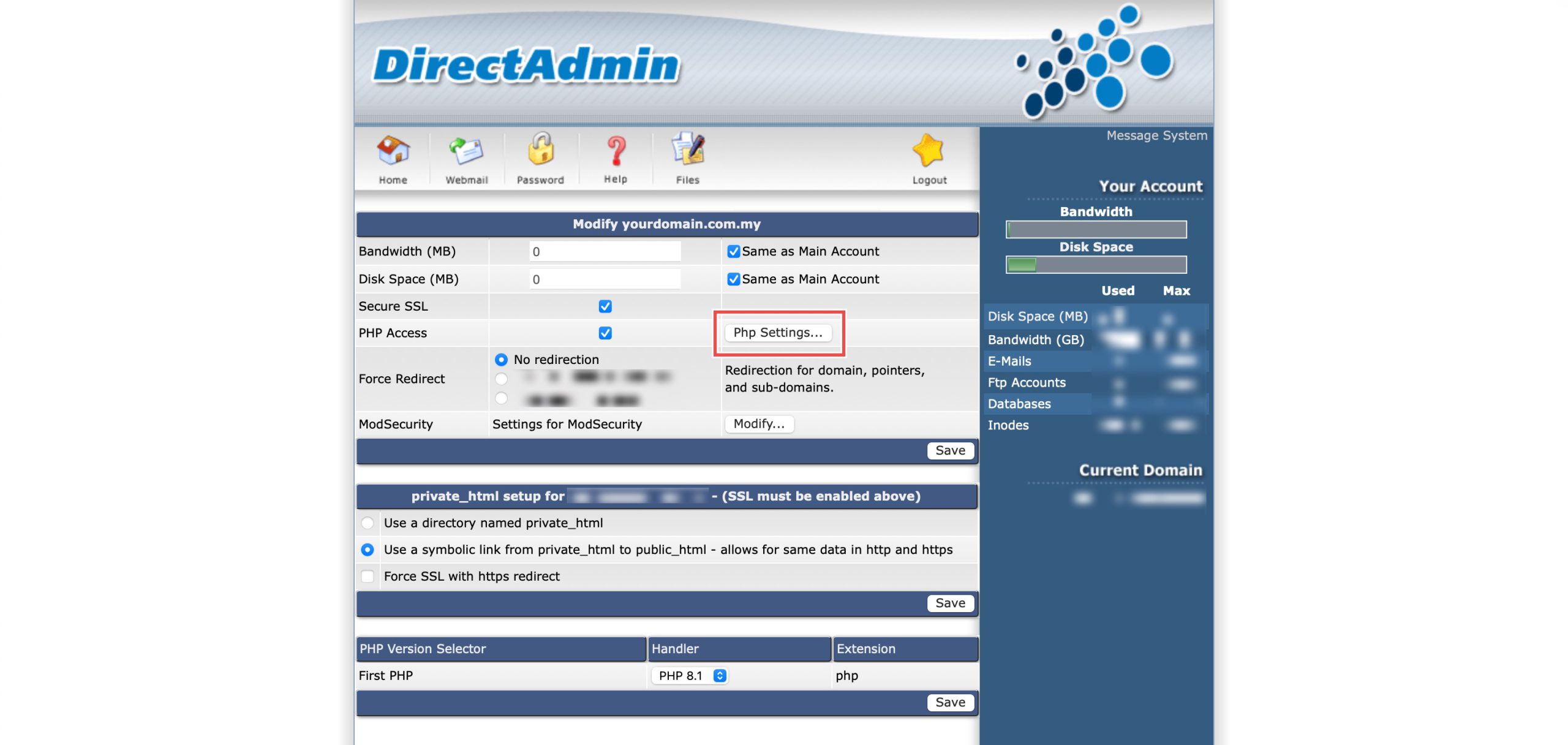
At the PHP Access row, click Php Settings…. You should be able to see a list of your current PHP configuration.
Step 3: Enable Error Log
Scroll down to the Add Override section. On the log_errors row, select On. Then, click Save on the right.

Step 4: Verify the changes
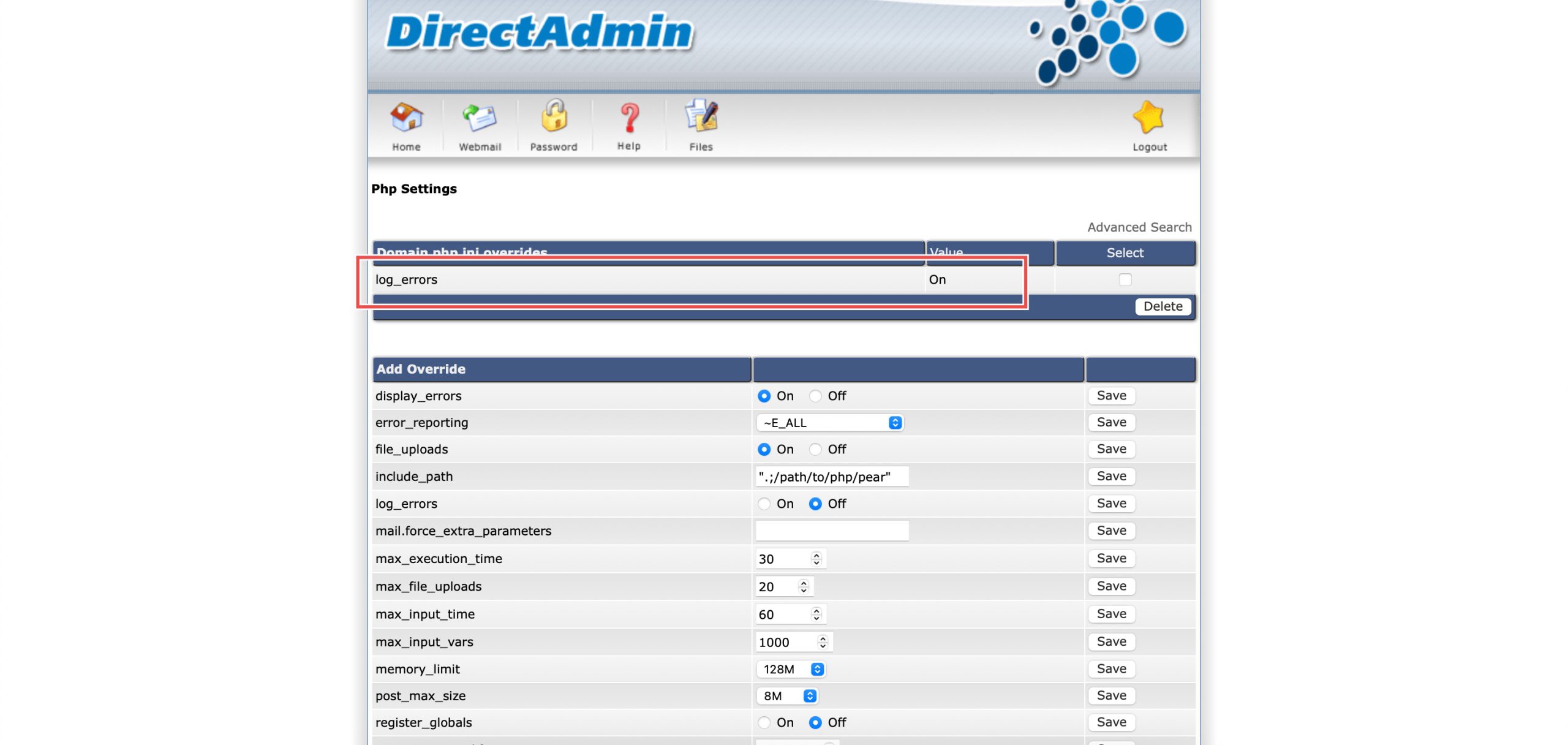
You may confirm the new override settings in the updated Domain php.ini overrides table. PHP errors will now be written to server log files, typically /home/yourusername/public_html/error_log or /home/yourusername/public_html/yourdomain.com/error_log.
Conclusion
Enabling PHP error logging through DirectAdmin’s PHP Settings interface is a simple process that captures runtime errors in server log files. Configuring the log_errors setting to “On” ensures comprehensive error documentation for troubleshooting and monitoring while maintaining security by keeping error details hidden from public view.
Should you have any inquiries about the guidelines, please feel free to open a ticket through your portal account or contact us at support@ipserverone.com. We’ll be happy to assist you further.